
Image generation AI is evolving rapidly, enabling tasks that once required time-consuming editing software to be accomplished instantly with text input. Nano Banana, reportedly developed by Google, is a representative technology in this space. Integration into Pixel smartphones and Google Photos is underway, potentially having a significant impact on business and everyday image utilization.
This article provides an overview of Nano Banana, including its features, usage environment, current pricing, and practical use cases.
You may also want to read
Table of Contents
- Positioning and Overview of Nano Banana
- Technical Features and Strengths
- Current Pricing and Availability
- How to Try Using LMArena
- Public Examples (Performance from X Posts)
- Summary
Positioning and Overview of Nano Banana
Nano Banana is reportedly Google’s latest image generation AI, which appeared on the researcher-oriented evaluation site “LMArena” in summer 2025. Note that Google has not explicitly stated it is “under development,” and this information is based on external observations.
What distinguishes it is the ability to naturally edit parts of images or fill in backgrounds simply by giving instructions via text or voice. Unlike traditional image editing, which requires mask specification and complex operations, its strength lies in its intuitive, easy-to-use mechanism.
Technical Features and Strengths
Nano Banana combines advanced editing capabilities with safety features. Particularly notable are the ability for users to give instructions directly in natural language and mechanisms that automatically identify editing targets, compared to conventional image generation AI. Internally, it combines a multimodal analysis engine with diffusion models, reportedly performing corrections while understanding layout and light sources. Representative features include:
Text-Based Editing
Simply instruct in natural language like “change the background to a night scene” or “remove the extra person,” and it will automatically identify the target and edit. While traditional tools like Stable Diffusion and Midjourney required mask specification and detailed operations, Nano Banana eliminates this need. Users can interactively make repeated corrections, offering high flexibility in adjustments.
Layout Recognition and Image Extension
Capable of outpainting that understands photo composition and light sources, naturally filling in margins. For example, when extending photo edges, natural image creation is possible while maintaining perspective and light direction. This is an area where traditional models were prone to failures, and the high precision stands out.
Person Consistency Maintenance
Can edit while preserving the same person’s face and features across consecutive photos. While “different person” generation was a challenge with generative AI when handling people, this model has strong capabilities for recognizing the same individual, making it suitable for marketing materials and photo series.
Fast Processing and On-Device Execution
With Google’s Tensor chip and optimized models, generation and editing can be performed nearly in real-time. Processing is executed on the device without relying on the cloud, excelling in both security and responsiveness.
Safety and Reliability
Adopts filters to prevent inappropriate use and mechanisms to embed watermarks in generated images. The watermarks are reportedly C2PA-compliant, providing a mechanism to verify that images have been AI-edited. This helps reduce the risk of misuse and misinformation spread.
Current Pricing and Availability
As of August 21, 2025, there is no dedicated pricing plan for Nano Banana. It is only available experimentally on the researcher-oriented evaluation site “LMArena,” accessible free to anyone.
Nano Banana is not yet officially released as an independent service and has no standalone offering format. Therefore, no additional fees are required, but when released as an official service, paid plans or billing systems may be introduced. Given that Google’s other generative AI services (Imagen, Gemini, etc.) adopt pay-as-you-go systems via cloud APIs, similar mechanisms are expected to apply.
Testing for free at this stage can serve as reference material for deciding on adoption when the official version is released. It’s valuable to verify features and quality in advance.
How to Try Using LMArena
Here, we introduce how to try Nano Banana on LMArena.
Accessing LMArena
Access LMArena’s official site, and you can use it immediately without login.
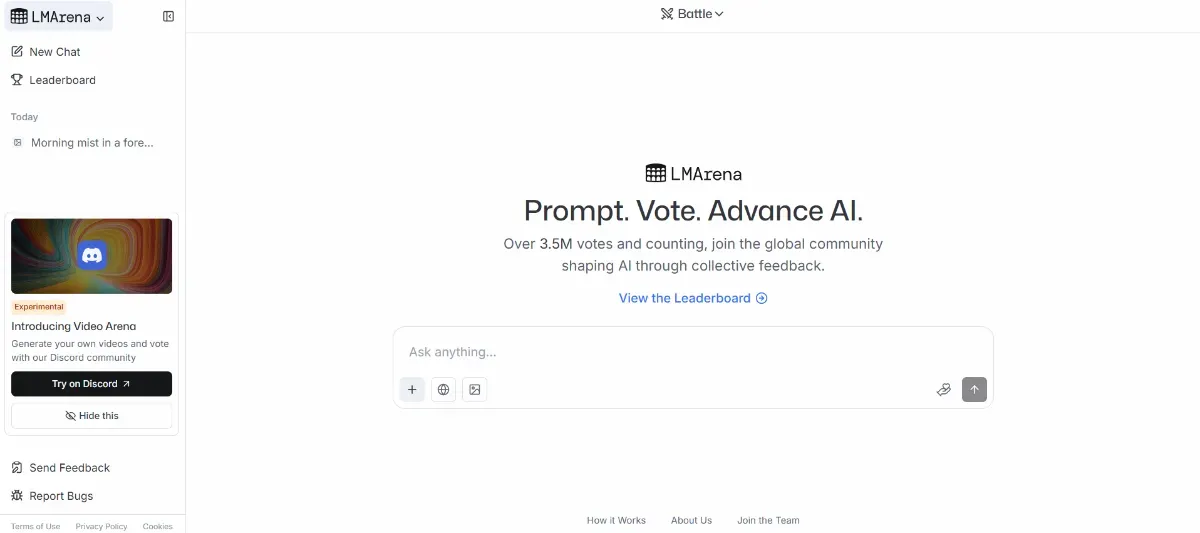
Prompt Input
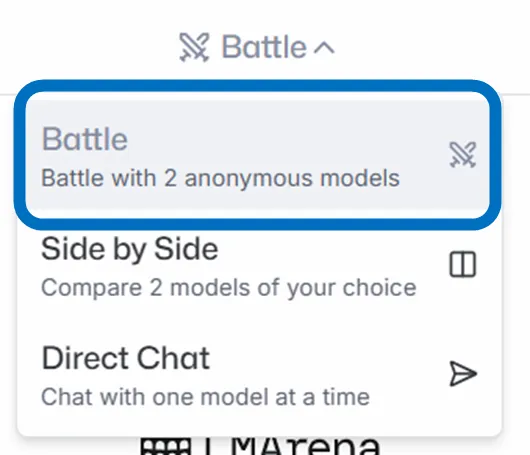
At the top of the screen are three usage modes:
-
Battle Conversational format with two anonymous models (default setting)
-
Side by Side Compare two selected models side by side
-
Direct Chat Direct interaction with one model
Nano Banana is currently only available in “Battle” mode.
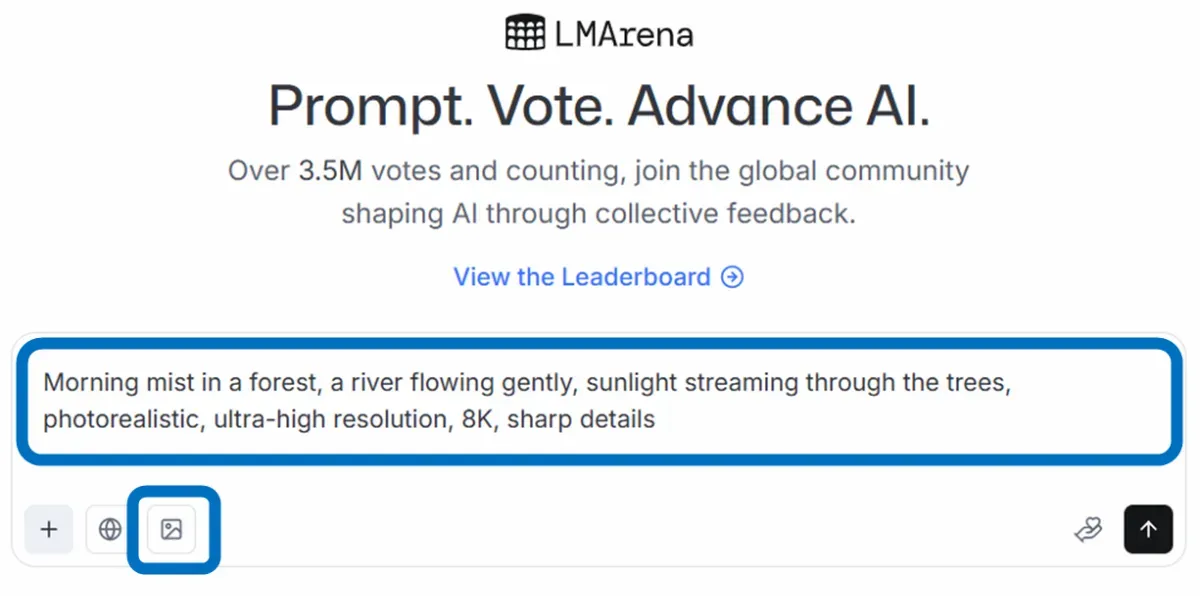
In the central input field, enter the content of the image you want to generate or edit. To edit an existing image, upload it using the ”+” button and enter a prompt similarly.
At this time, be sure to select the image icon.
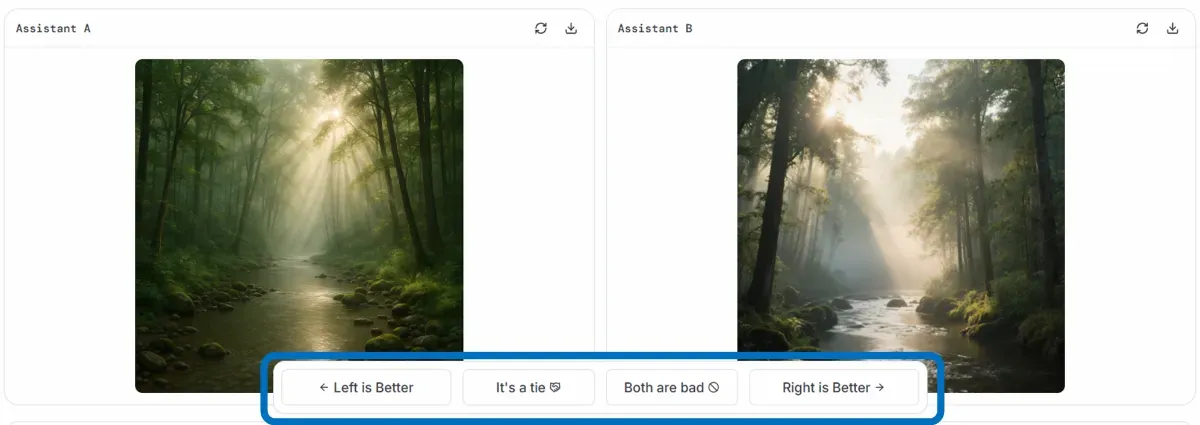
Result Evaluation
When generation is complete, two images will be displayed. Evaluate which image is superior with buttons like “Left is Better” and “Right is Better”. When you evaluate, the model names used at that time will be displayed. However, Nano Banana is not necessarily chosen, as models are randomly selected. To confirm results using Nano Banana, you need to repeat this process multiple times.
Public Examples (Performance from X Posts)
Here, we introduce actual use cases of Nano Banana posted on X (formerly Twitter):
-
Freely editing hairstyle, clothing, and background while maintaining person consistency
-
Faithfully reproducing texture and details from the original image
-
Remarkable consistency in skin tone, face, and background even when changing angles and composition from a single image
Summary
Google’s Nano Banana is a next-generation AI that enables intuitive image editing via text or voice. Starting with the experience on Pixel smartphones, enterprise use through cloud APIs is expected to expand. It has the potential to simultaneously achieve editing work efficiency and creative expansion. We recommend paying attention to the official release and integration into Google products in the future.